Ground control
Your best employees buy holiday homes and designer clothes while you age a decade for every two years on the calendar. Dorian Gray in reverse. They clock out; you never do. Every month, signing off on expense reports, a wave of rage hits you that you can't share with anyone.
Because who would understand? Your team thinks the company runs itself. Your board thinks you should delegate more. Your partner stopped asking about work years ago.
And every real decision still lands on your desk.
You didn't plan this. Your company used to be small enough that you could talk to it directly. You said something, people understood, things moved. Like raising a child: chaotic, exhausting, but you always knew where they were and what they needed.
Your company isn't a child anymore. It's a teenager who comes home at 3 am, doesn't say where they've been, falls asleep hugging a bottle of Martini, and spends money you didn't authorise.
The way you used to communicate doesn't work anymore. You have not lost your touch: the organism has just grown too complex for one voice to reach every corner. Your strategic intent gets diluted, reinterpreted, or lost before it reaches the people making daily decisions.
Nobody sees the missing layer. It just looks like the team isn't stepping up.
What this is actually costing you
Decisions that should take a week now take a quarter. Nobody feels authorised to move without your sign-off. That's margin, leaking through the floor.
Your best people leave. Not from disloyalty. From the slow frustration of never knowing what actually matters. Recruitment costs pile up. Knowledge walks out the door.
The most expensive loss is the one you never see. Market opportunities expire while the organisation is still deciding whether to act.
What you have tried
You've hired consultants. They spent weeks "understanding the company." Plenary meetings that paralysed your highest-paid people for hours. Calls. Interviews. Workshops. Then they presented a playbook that works for every company and therefore for no company. Your team filed it next to last year's playbook. Nothing changed, except you're lighter by a few hundred thousand and heavier by one more layer of cynicism.
The diagnosis was perfect. Nobody ever showed up for the transformation.
If you agree that the problems of your own very company deserve to be diagnosed remotely, assembled into a deck, and then returned to you exactly as they were (only in a much better, white-and-blue packaging), do yourself a favour. Fire the consultants and feed everything to AI. It's cheaper. The results won't be dramatically different. Nowadays, you can even get the same beautiful slides, the same frameworks, the same recommendations nobody implements.
But you already know that's not the answer either. Diagnosis was only part of the problem. The real issue is that nobody sits in the room with you, rolls up their sleeves, and does the work. The real frictions can't be felt from a distance. They live in the conversations that happen after the meeting, in the decisions that get made in corridors, in the things your team won't say while consultants are in the room taking notes.
You'll still need someone who does the work. Not someone who describes it.
What actually works
You need ground control.
Not a consultant. Not a coach. Not another senior hire who nods in meetings and waits for direction like everyone else.
Ground control is the translation layer between the founder and the organisation. The founder is the astronaut: visionary, brilliant, operating where the air is thin and the view is extraordinary. But between the astronaut and the ground, an entire operation needs to understand the mission, make real-time calls, and keep things running without waiting for Houston to answer every question.
Ground control speaks both languages. Translates both ways. All the time. Without losing signal.
What does this look like in practice? In one company, the founder communicated strategy through metaphors and instinct. Brilliant instinct, but the team had learned to nod and then interpret freely. Three people in the same room would walk away with three different versions of the strategy. Within months, we built a shared decision language. Not a slide deck. A living system that let the team distinguish what mattered from what didn't, without escalating every call upward. Escalation dropped. Decision speed doubled. The founder could finally focus on what only the founder can do.
The rest of the story?
We write it while we're living it. Together. Inside your company: not from a hotel lobby with a laptop and a good Wi-Fi connection.
Why me
Because I've done the work.
Twenty-five years inside physical product companies. Thirteen of those inside a premium FMCG brand that grew from €40M to €120M while maintaining profitability. I wasn't advising. I was there. Ten European markets opened first-hand. A direct-to-consumer platform built from scratch.
When I left, the founder wrote that I had been one of the most important assets of the organisation, and that he saw me leave with great regret. I share this not to boast, but because it tells you something no CV can: I earned the absolute trust of a founder who built a company worth north of a hundred million, by systematically aligning my outlook and actions with the goals of the entire company. His words, not mine.
And yet, when I left, the DTC platform I had built didn't survive. Because the translation layer had been me. I hadn't made the system independent enough.
That failure changed everything about how I work. Now, every engagement starts with one question: what happens when I'm not here? What I build stays with you. The frameworks, the decision systems, and the language your team learns to speak. It belongs to your organisation, not to me.
Running a company isn't a 9-to-5 job. I know that. When the idea hits you at 10 pm, and you need a sparring partner, you don't have to keep it to yourself.
If this reads like your company
I close the distance between what you see and what your team executes. Not with a workshop. Not with a deck.
I sit down. I stay. And we fix it.
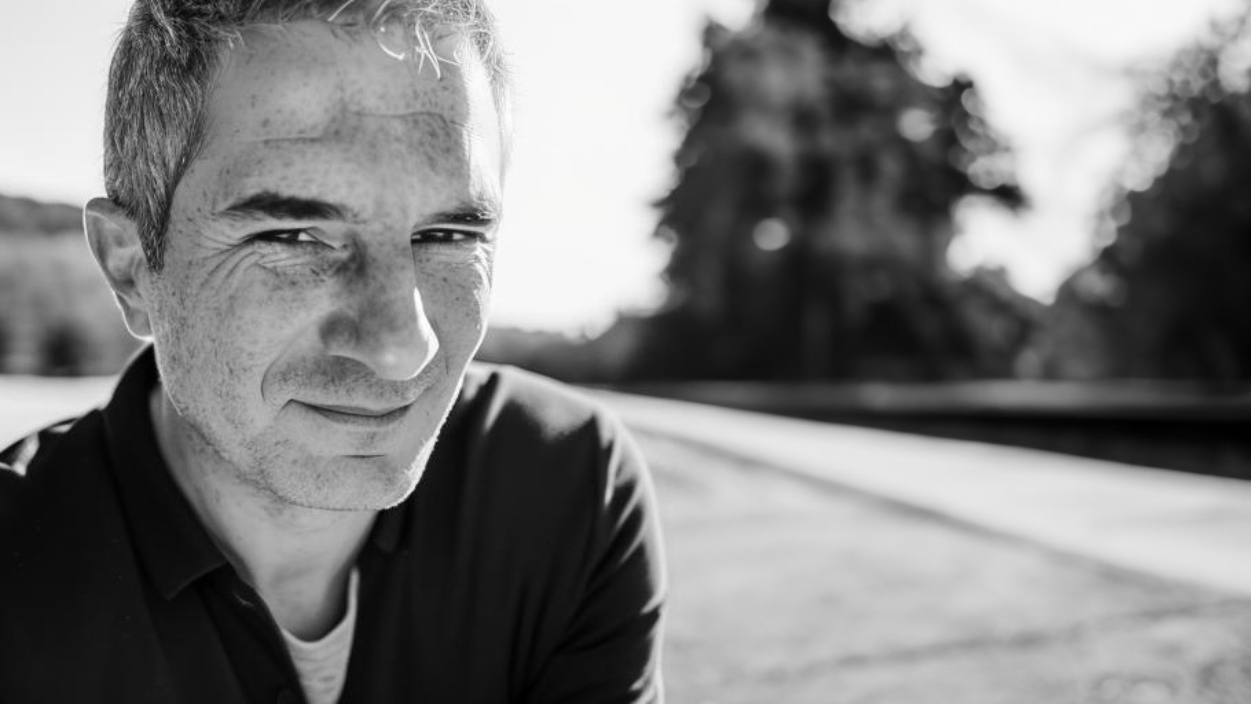
I'm Alberto Pasino. I write Thinking Sideways, where I explore what happens when strategy has to survive reality. Based in Zurich. LinkedIn or email me.