Your customers kept buying despite you. Here's why that's not a compliment.
I had never sat on the mezzanine before. Four years at that headquarters, and I had never once worked from that floor.
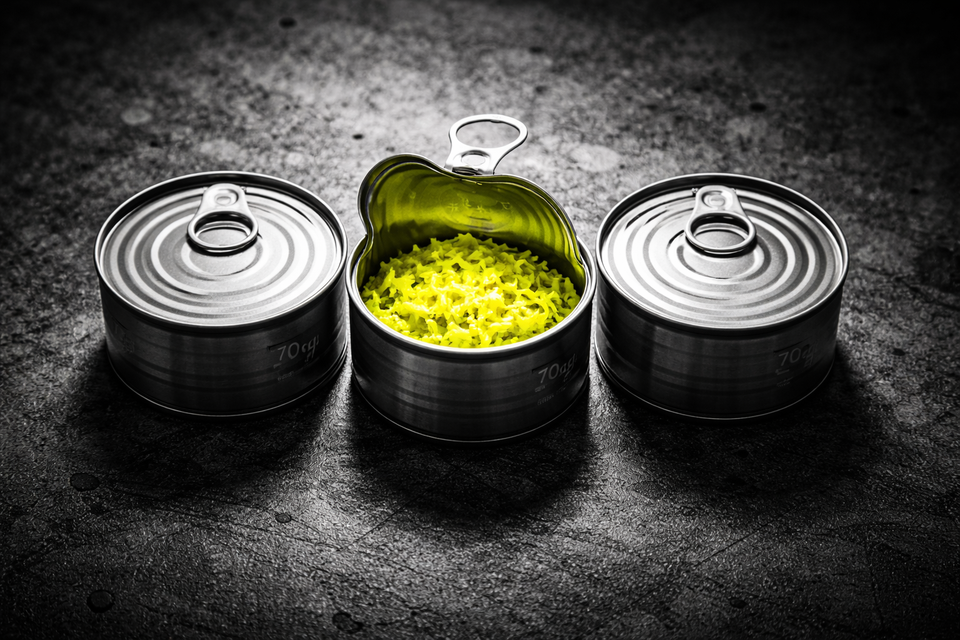
Downstairs, the official narrative was being served up, cool and clinical. Tuna prices were climbing, so the company had decided to cut the tuna content in its fish recipes from 75% to 55%, drop the price to €0.99 (from €1.09), and slap a new label on them: "Classic." The chicken recipes, untouched, got a shiny new name too: "Legend." On paper, it all made sense. The kind of sense you get from people who have never tried to sell anything to a German wholesaler.
I was the person who had to sell it to German wholesalers.
Two bestselling fish recipes, number two and number three in the whole portfolio, were about to change formula, price, and name. If you’ve ever worked in FMCG, you know the icy dread that comes with changing even a comma on the packaging of something that sells. We were changing everything. All at once.
But that was the manageable part.
The unmanageable part had arrived on shelves a few days earlier, without warning. The largest pet retail chain in Germany had launched its own ultra-premium private label. Comparable quality. Ten cents cheaper. Positioned right next to our product.
I had just moved to Switzerland, never held a commercial role before, and the buyer at the German retail chain had spent the previous weeks trying to squeeze every contractual concession out of me before casually introducing his own competing range days after I signed.
It felt like the world was collapsing on my head. Meanwhile, the conversations swirling around me could have been from a different movie. One where I was just an extra.
The lunch I skipped
The marketing director, who had been in the role for approximately two months, was not helping. He sat there in his royal blue blazer, probably worth two grands, tailored to perfection, black shirt billowing where the fabric couldn't quite find his body, yellow bow tie (I swear), stroking the founder's Jack Russell terrier as his sole contribution to the company's survival. The Jack Russell seemed more invested than he did.
The official narrative everyone was being handed went something like this: "Due to rising raw material costs, we have reformulated our fish range to maintain accessible pricing for consumers."
Accurate. Completely useless.
It answered a question nobody was asking. In an intermediated market like Germany, the wholesalers don't buy your narrative. They can't transfer it to the shopkeeper, and the shopkeeper can't transfer it to the consumer. The wholesalers buy numbers. And when you tell them that two SKUs, responsible for 20% of the brand's turnover, have just changed their formula and name, they don't hear your supply chain justification. They hear risk. If the change is cosmetic, clients will act as though the world is ending, because that's how you extract concessions. If the change is genuinely dangerous, they simply freeze, because the first commandment of retail is: you do not touch what works.
We were in the second category. And the largest retail chain in the country had just placed a private label next to our products. A masterpiece of branding, if by masterpiece you mean something that looked sinisterly more like an air freshener than a cat food. But the price was perfect, and the shelf placement was lethal.
This story was cooked up for the Italian sales team and then shipped, word-for-word, to every other market.
When the team went to lunch, I stayed.
"No, I'm not coming. I think I've figured out how to sell this."
The marketing director mumbled something about the presentation being his territory. The founder silenced him with four words: "Let him do it." He was fired a few months later, for reasons that will surprise no one who has read this far.
I sat on that mezzanine, sleeves of my favourite Tommy Hilfiger shirt rolled up (a shirt I adored, even though it clearly didn’t return the feeling), sweat patches blooming under my arms, not from fear, but from the thrill of maybe, just maybe, having found a story that could work.
The intuition was simple. That private label was haunting my nights. And if it was haunting me, it had to be haunting the wholesalers too, because their whole business depended on independent specialist retailers staying alive.
If I couldn’t sleep, maybe they couldn’t either.
When they came back from lunch, I pitched it to the founder."These guys have launched a private label that will destroy your independent specialist customers. They cannot compete on price. But we have created a range designed to give your independents a weapon: a premium natural product at €0.99 that can stand next to the private label and win. Classic isn't a reformulation. It's your defence strategy."
Was the framing true? Classic existed because of a supply chain problem. But the reframe worked because the underlying fear was genuine. I gave their terror a solution, and the solution happened to be sitting in our warehouse, waiting for a story.
The founder looked at me, smiled, and said: "Brilliant." Then he called the entire team into the meeting room and made me repeat it.
That evening, I drove back home. The world felt slightly less black.
It worked. The wholesalers saw their own fear reflected in my pitch. The news about fewer tuna didn’t start World War Three.
But here’s what still bothers me: should the survival of a company’s biggest export market really depend on whether one person, maybe the only one with enough context, decides to skip lunch?
The founder's blind spot (and why it's worse when they're right)
The man who built that company is Piedmontese (just like me, by the way). Hair that suggested he had better things to do than use a comb. The oratorical style of a political agitator. And a relationship with his product that bordered on the spiritual. He tested the food on his own dog, the one that followed him everywhere.
He once ordered the removal of the "dolphin safe" certification from the cans. His reasoning: "We cannot guarantee the product is dolphin safe, and neither can anyone else. If a dolphin gets caught by accident in the nets, do you really think the Thai fishermen would extract it and throw it back into the sea? What do people think?" When the team protested that consumers wanted the reassurance, he was unmoved. "Then they don't understand."
He was right. That's the point. He was almost always right about the product.
And being right is the most dangerous thing that can happen to a founder.
Here’s the uncomfortable truth nobody in startup land wants to hear: the more a founder loves their product, the less they understand why people actually buy it.
Not because love makes you stupid. Love just makes you rationalise. The founder lives with the product. He pulled it from his own imagination, breathed it, iterated it, and couldn't sleep because of it. He knows every ingredient, every formulation change, every compromise. And in that blind love, he constructs a coherent internal narrative about why the product matters. It all makes sense. From inside.
The customer doesn’t show up with any of that baggage. The customer shows up with a job to be done. But which job? That’s still one of the most stubborn mysteries in business.
Three customers, three jobs, zero shared language
When the company launched its flagship product, there was nothing like it on the shelves. A pet food made with ingredients fit for human consumption. Sales agents used to open a can in front of sceptical shopkeepers and eat the chicken fillets right in front of them. Try doing that with the competitor's product.
That visual shock, the moment when a human puts pet food in their mouth, and it looks like something you'd serve for lunch, was the engine of the entire business. And the reason it worked had almost nothing to do with what the company thought it was selling.
The end consumer was buying something deeply personal. For decades, cat food was industrial sludge: same texture, mystery ingredients, a smell that could clear a room. Then this product landed, and suddenly you could see the chicken, spot the tuna. It looked like real food because it was real food. The dynamic was more like baby food than brand loyalty: you’re buying for someone you love, someone who can’t buy for themselves. The job wasn’t status. It was relief. "I can finally give my cat something it would eat in nature, not that landfill stuff. They’ll be happier. And they’ll know." Whether cats actually know is debatable. The consumer isn't debating at all.
The independent Italian retailer saw the same product and grabbed it for a totally different reason. By the late '90s, pet food was a supermarket game. Specialist shops, mostly tiny independents, were getting squeezed: same brands as the supermarket, higher prices, and chains breathing down their necks. They needed something the supermarket didn’t have. Something premium, exclusive, with margins big enough to keep the lights on. The job: a reason to exist when the market was closing in from both sides.
The first-generation German chain buyer didn’t see the emotion or the survival story. They saw a gap. In Germany, specialist pet retail was already big: Fressnapf had been growing since 1990, and the premium wet cat food tier was wide open. The early buyers at these chains had real commercial instincts, sharper than the bureaucrats who came later. They saw a slightly crazy, genius Piedmontese entrepreneur with a killer product and a white space. The job: margin and differentiation in a category turning into a commodity.
Three customers. Three completely different jobs. One product. And not a single shared document, framework, or conversation inside the organisation that articulated any of them.
The founder just knew all this, intuitively. He’d walk into a shop in Italy and say one thing, then meet a German buyer and say something else entirely. It worked, but only because the context lived in his head.
But you can’t distribute intuition. When the company expanded into 52 countries, each market began developing its own strategy. Nobody was wrong. But nobody was on the same page, either.
This is the translation problem I keep coming back to. The founder has the map. The organisation needs a compass.
Then the map disappeared entirely.
At a certain point, the founder donated the entire company to a nonprofit foundation. Every euro of profit went to protecting biodiversity. The conviction was absolute.
But something else happened. The company’s internal language changed. What used to be about product quality turned into talk about mission. Biodiversity. The foundation. The product, the thing customers actually bought, started to disappear from the conversation.
I used to joke that people kept buying our brand not because of what we did to it, but in spite of everything we did to it.
The joke has a structural point. When nobody in the organisation can articulate why customers actually buy, every decision that touches the customer becomes an act of improvisation. And when a crisis hits, someone has to skip lunch and come up with the answer on their own.
The connection nobody has made
Prof. Clayton Christensen's Jobs-to-Be-Done framework is one of the most powerful ideas in modern business thinking. Prof. Christensen used it to explain innovation: why do customers switch products? What "job" are they trying to get done? April Dunford extended it to positioning: communicate your product in terms of the job it serves. Mark Ritson connected it to distinctiveness: once you know the job, you know what to be distinctive about.
All brilliant. All aimed at the customer side of the equation.
The most important application of the jobs-to-be-done framework has nothing to do with the customer.
The job-to-be-done is an organisational tool. Specifically, it is a delegation mechanism.
I looked for precedents. A few companies (Intercom being the most documented) have reorganised teams around customer jobs. Some frameworks connect JTBD maps to role design and decision rights. But in every case, the JTBD informs the delegation. It feeds into existing governance tools.
That misses the point by a mile. The job-to-be-done doesn’t just inform delegation: it’s what makes delegation possible in the first place.
Think about what happens every time a founder hangs onto a decision because "nobody else understands the customer well enough." The real problem is there’s no external criterion to replace the founder’s gut. The usual advice, "learn to delegate", is so vague it’s almost an insult. The real fix: give the team the same compass the founder instinctively uses.
The job-to-be-done is that instrument.
If the team knows the job, they can make pricing decisions without calling headquarters. They can adapt the narrative for a German wholesaler without having to improvise on a mezzanine. They can evaluate a product change against the customer's actual criteria. They can decide without waiting.
And here is where it connects to something I have been building for months.
The anchor that was missing
I’ve counted seven places where strategy goes to die between the founder’s head and the real world. All internal: implicit strategy, concentrated knowledge, decision latency, fake alignment, misaligned incentives, values that never make it off the wall, and the culture gap.
Every single one survives for the same reason: there’s no shared, external anchor.
Without the job, the strategy gap widens because there is no criterion for trade-offs. The knowledge gap deepens because the founder's intuition has no distributable form. Decision latency increases because every customer-facing call requires escalation. Alignment becomes theatre because people interpret vague intent differently at the shelf. Incentives drift. Values remain wallpaper. The same absence, seven symptoms.
The job to be done doesn’t add any additional friction. It squeezes all seven at once.
Prof. Christensen gave us the tool. He used it for innovation. Dunford used it for positioning. The use that would matter most to a founder trying to close the say-do gap has been hiding in plain sight: the JTBD is how you make strategy survive contact with reality without requiring the founder to be in every room.
The Monday morning move
Take your bestselling product. Ask three people from different parts of your organisation: "Why does the customer buy this?"
If they all give you the same answer, you’ve got something rare.
If the answers don’t match, you don’t have a communication problem. You have three competing strategies that don’t even know the others exist.
Now try a harder question. When was the last time a firsthand customer insight, not a survey, not a report, changed a decision? If you can't remember, you're navigating by a map that hasn't been updated since the founder drew it.
And here’s the uncomfortable one: is it possible your customers buy your product not because of your story, but in spite of it?
If that makes you squirm a little, good.
That discomfort is worth more than your next strategy deck.
Sources and references
Clayton M. Christensen et al., "Competing Against Luck" (2016): Harper Business | Christensen Institute
April Dunford, "Obviously Awesome" (2019): aprildunford.com
Bob Moesta, "Demand-Side Sales 101" (2020): The Re-Wired Group | Amazon
Des Traynor, "Intercom on Jobs to Be Done": intercom.com/books/jobs-to-be-done



Member discussion